
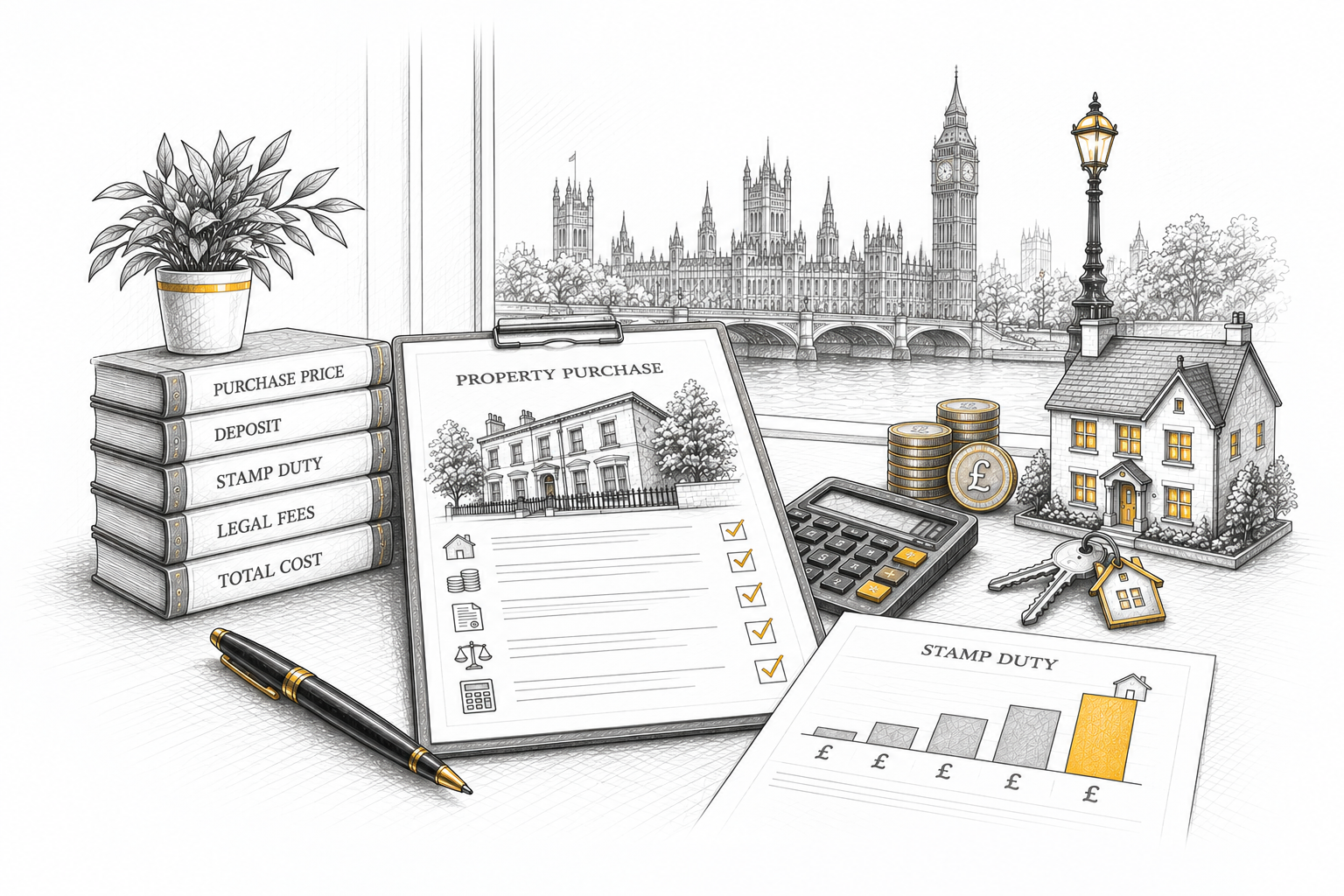
A client came to us early in his search, unaware that the stamp duty thresholds had changed. That is not unusual. It is also why we go through the full cost of a purchase in the first conversation: deposit, fees and the stamp duty bill, so a client can plan properly rather than discover the number later.
If you have run a stamp duty calculator on a London purchase recently and the figure came out higher than you expected, here is what changed.
The current bands
Since 1 April 2025, the standard nil-rate band for Stamp Duty Land Tax (SDLT) in England and Northern Ireland has been £125,000, down from the temporary £250,000 threshold introduced in September 2022. Above that the rate rises in stages: 2% on the portion up to £250,000, 5% up to £925,000, 10% up to £1.5 million, and 12% on anything above that.
SDLT is charged on a slice basis. Each rate applies only to the part of the price falling within that band, not to the whole purchase. Scotland and Wales operate their own systems, LBTT and LTT, with different thresholds again.
What that looks like on a London price
On a £750,000 flat bought as a main residence: nothing on the first £125,000, then £2,500 at 2% on the next £125,000, then £25,000 at 5% on the remaining £500,000. Total £27,500.
Buy the same flat as a second property and the 5% surcharge applies to every band, including the first £125,000. That adds £37,500, taking the bill to £65,000. This is the part most calculators bury and most buyers underestimate: the surcharge is not charged only above the nil-rate band, it is charged on the whole price.
First-time buyers still get relief, but a smaller one
First-time buyers pay nothing on the first £300,000 and 5% on the portion between £300,001 and £500,000. Both figures are lower than the thresholds that applied before April 2025, when relief ran to £425,000 on purchases up to £625,000.
Above £500,000 the relief does not taper. It disappears. A first-time buyer at £500,000 pays £10,000. At £505,000, with no relief at all, they pay £15,250. Five thousand pounds more on the price costs an extra £5,250 in tax. In London, where a great many two-bedroom flats sit within a few thousand pounds of that line, it is worth knowing before you make an offer rather than after.
Second properties and overseas buyers
Anyone buying an additional property, whether a second home, a buy-to-let, or a new home bought before the current one has sold, pays the 5% surcharge. It rose from 3% to 5% on 31 October 2024, which materially changed the maths for portfolio landlords and for anyone buying before selling. Non-UK residents pay a further 2% on top of that, calculated on the same sliding scale.
| From 1 April 2025 the standard SDLT nil-rate band is £125,000 (down from £250,000). The additional-property surcharge is 5% (up from 3% on 31 October 2024) and applies to every band. Multiple Dwellings Relief was abolished on 1 June 2024. England and Northern Ireland only. |
Why this catches people out
Stamp duty cannot usually be added to the mortgage. It has to be money you hold separately, and it is payable within 14 days of completion. A buyer who priced their purchase around the old thresholds, or who did not realise the surcharge applied to their situation, can find themselves short at exactly the wrong moment.
It is a conversation London FS has early, alongside the mortgage numbers, rather than one left until the solicitor’s completion statement lands. If you are working out what a purchase will genuinely cost, it is worth having that conversation before you offer.
Sources: HM Government, Stamp Duty Land Tax rates (effective 1 April 2025); HM Treasury, Autumn Budget 2024, Higher Rates for Additional Dwellings (effective 31 October 2024).