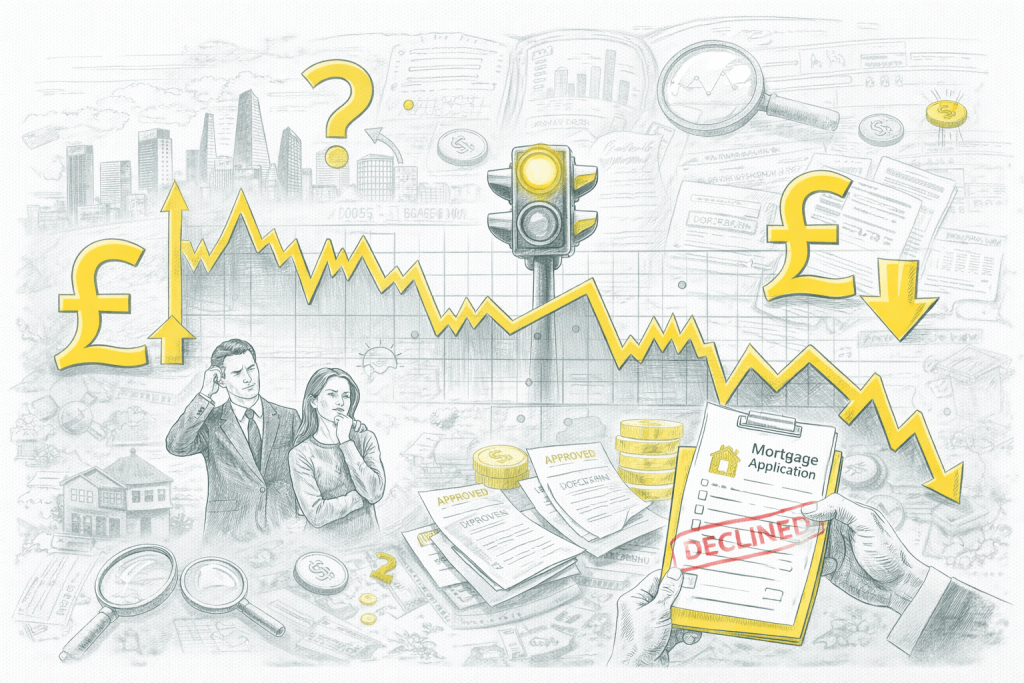


Not long ago, a lot of buyers were hitting the same wall — and it wasn’t the deposit or the property. It was the affordability calculation. You could see the home, you could cover the monthly payment on paper, and the lender still said “no” or offered far less than you’d expected. It’s a particular kind of frustration: the goalposts moving mid-game. Now something’s quietly shifting. Affordability is loosening, and more lenders are offering higher income multiples again — in the right cases, 5.5 and even 6 times income.
That one change can restart moves that have been stuck for years. At London FS we can hear it in the questions — less “can I even buy?” and more “what’s realistic for me now?” Here’s what’s actually happening, who it helps, what lenders look for, and how to use it sensibly rather than get carried away.
What “affordability loosening” actually means
Affordability is the lender’s check on whether you can manage the repayments — now, and if rates moved. It’s not just your salary; it’s stress testing, outgoings and credit commitments too. When it’s tight, even strong earners get offered less than they expect. When it loosens, lenders may lend a bit more, ease their stress-test assumptions, accept a wider range of income types, or apply more flexible rules to certain borrowers. It sounds technical, but a small change here can swing your borrowing power by tens of thousands of pounds — which is exactly why it matters.
Why income multiples matter more than people realise
An income multiple is just how much a lender will lend relative to your salary. On a £50,000 income, 4.5x gets you £225,000; 5.5x, £275,000; 6x, £300,000. That £75,000 gap isn’t academic — it can be the difference between a flat and a house, a long commute and the right location, a compromise and a home that actually fits your life. In London and the South East, where prices and average incomes have drifted apart, that’s why higher multiples are getting so much attention.
Why lenders are offering them again
It’s not generosity — it’s competition. When rates climbed fast, lenders got cautious and affordability models tightened. Now that pricing has steadied and conditions look more predictable, some are cautiously reopening higher-multiple lending. When a lender wants to grow its mortgage book, it competes on two things: headline rate and borrowing power. Higher multiples are how they compete on the second.
Who can realistically get 5.5x–6x
This needs saying plainly, because overpromising here would be unfair: these multiples aren’t for everyone. Lenders reserve them for borrowers who look low-risk — strong, stable income, low existing debt, clean credit, and often specific property types or price bands. Some tie them to particular professions; others go purely on the affordability model. The important thing is that a higher multiple isn’t free money — it’s a lending decision built on confidence you can handle the repayments. We’d rather tell a client early that it isn’t realistic than watch them waste an application chasing it.
The multiple isn’t the whole story
Hearing “6x income” and assuming you’ll be offered it is the most common mistake. The multiple is one input; the lender also weighs monthly commitments, childcare, travel, pension contributions, lifestyle spending and property costs like service charge and council tax. That’s why two people on identical salaries can get very different offers — and why a friend’s approval tells you almost nothing about your own. It’s the full picture that counts.
What it changes for first-time buyers
For first-time buyers this can be a genuine game-changer — not because it makes homes cheaper, but because it narrows the gap between what you can borrow and what things actually cost. Plenty of first-timers earn well yet hit an affordability wall as prices outpace wages. A higher multiple can put the home they were stretching for within reach. The flip side is responsibility: a bigger mortgage has to stay comfortable through job moves, parental leave, childcare and the odd nasty surprise. We’re deliberately careful here — we want clients excited by the option, not trapped by it.
Home movers benefit just as much
It’s easy to fixate on first-time buyers, but movers often gain the most. Many have equity and steady income yet found the next rung harder once rates rose and the affordability model capped the new loan. As borrowing power improves, that next step becomes realistic again — and moves are rarely just upgrades. They’re a new baby, a room to work from, being nearer family, a school catchment, caring responsibilities. Loosening affordability simply hands people back their options.
A level-headed word on the risks
Higher multiples help, but they aren’t always the right call. A bigger loan means higher payments, more exposure when your fix ends, and less slack if your income changes. So treat 5.5x and 6x as tools, not targets — the aim isn’t to borrow the maximum, it’s to borrow what your life can carry comfortably. We say the same thing to clients often: just because a lender offers it doesn’t mean you should take it. The best mortgage is the one you can live with.
How lenders reach the number
Roughly, it runs in order. First the lender looks at income — salary, plus bonus, commission, overtime or self-employed earnings depending on its rules. Then outgoings — committed borrowing and regular living costs. Then the stress test: could you still pay if rates rose? That step is what tightened borrowing so much in recent years. Only then does its internal model settle on your borrowing power, and the multiple falls out of that. It’s a full assessment now, not “salary times a number”.
Why this lands hardest in London
Let’s be honest about why higher multiples are even a conversation: in much of the UK, and London especially, standard multiples simply don’t match real prices. Even a modest London home can need borrowing beyond the traditional cap — that’s the market being expensive, not buyers being reckless. Higher multiples don’t fix the housing market, but they can bring a bit of balance back for professional buyers. Most just want to know what’s genuinely possible without being misled — which is precisely the guidance we’re being asked for.
How London FS helps
There’s a lot of noise online — some of it implies everyone can suddenly borrow 6x, some of it says it’s impossible. The truth sits in between. We help clients work out whether higher multiples are realistic for their profile, how to present income clearly, what lenders want with more complex income, and how to avoid the wasted applications that dent your credit — then which structure actually suits your plans. We treat a mortgage as a decision, not a product. That distinction is the whole point.
In short
Loosening affordability is one of the more important shifts in the market right now, and for the right borrowers it’s reopening 5.5x and 6x options. But higher isn’t automatically better — it should always be balanced against comfort and the long view. If you’d like a clear read on what’s realistic for your situation, London FS can help you weigh the options and decide with confidence.
Call London FS on +44 (0)20 8427 5057 or email enquiries@london-fs.com.
FAQs
What does mortgage affordability UK mean?
It’s the lender’s calculation of whether you can afford repayments now and under stress testing, based on income and outgoings.
Are 5.5x income mortgages available to most buyers?
Not usually. They tend to be aimed at borrowers with strong income stability, low debt, and strong affordability.
Can I get a 6x income mortgage as a first-time buyer?
In some cases, yes, but it depends heavily on lender criteria, deposit size, and your full financial profile.
What affects mortgage borrowing power besides salary?
Outgoings, credit commitments, childcare costs, and lender stress testing can all reduce borrowing power.
How can London FS help with higher income multiples?
London FS can assess your eligibility, compare lender criteria, and help you choose a mortgage that fits your long-term budget.