

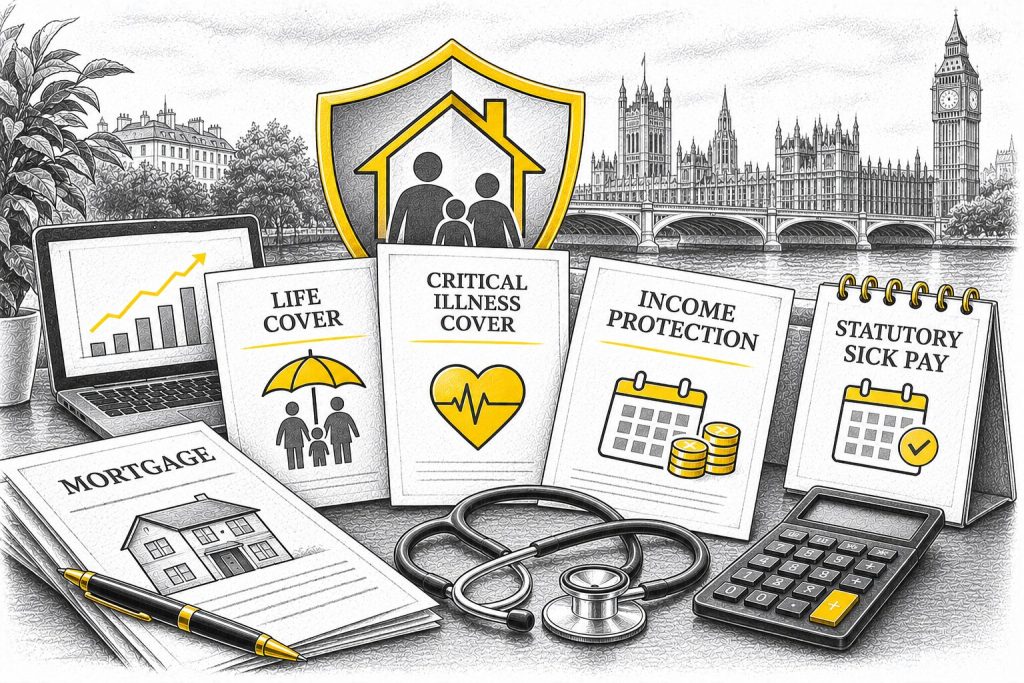
Quick answer: If you cannot work because of illness or injury, income protection is the cover designed to pay a regular income, usually after a waiting period called the deferred period. Critical illness cover pays a lump sum if you are diagnosed with a listed condition, and life cover pays out on death. Statutory Sick Pay is £123.25 a week in 2026 to 2027, about £534 a month, which would not cover most mortgage payments.
Most people with a mortgage have thought about what happens if they die. Fewer have thought about what happens if they are alive but unable to work for months. This guide compares the three main types of cover and sets out what you would receive from the state or your employer if you were off sick, so that you can see where the gap is.
What you would get without any cover
Statutory Sick Pay is £123.25 a week for the 2026 to 2027 tax year, or 80% of your average weekly earnings if that is lower. Since 6 April 2026 it is paid from the first day of sickness, and the old waiting days no longer apply. That works out at about £534 a month. It is paid by employers, so it does not apply if you are self-employed, and it lasts for a limited period. Some employers pay more than the statutory minimum for a time, which is worth checking in your contract.
For most homeowners, a mortgage payment alone is larger than that. The gap between what you would receive and what you need is what protection is for.
The three types of cover compared
| Life cover | Critical illness cover | Income protection | |
|---|---|---|---|
| Pays out when | You die, or are diagnosed with a terminal illness, depending on the policy | You are diagnosed with a condition listed in the policy | You cannot work because of illness or injury |
| How it pays | A lump sum | A lump sum | A regular monthly income |
| Waiting period | None | None, but the diagnosis must meet the policy definition | A deferred period you choose, for example after sick pay ends |
| Pays until | One payment | One payment | You return to work, the policy ends, or you retire, depending on the policy |
| Best at covering | A mortgage and family costs if you die | A large one-off cost after a serious diagnosis | Everyday bills including the mortgage during a long absence |
These are general descriptions. Each policy has its own definitions, exclusions and terms, and cover is subject to underwriting. Income protection usually pays a proportion of your income, not all of it.
What the claims data shows
The Association of British Insurers reports that UK protection insurers paid out £7.84 billion in claims in 2025, about £21.5 million a day. Across individual and group policies, 79% of new income protection claims and 90.2% of new critical illness claims were paid. Musculoskeletal conditions, such as back problems, were the most common reason for an individual income protection claim, at 33%, and mental health conditions accounted for nearly 19% of the amounts paid. These figures show that claims are paid, and that they are often for conditions people do not think of first.
Which one do you need?
There is no single answer, and many people hold more than one type. A few questions help to narrow it down:
- How long could you pay your mortgage and bills from savings and sick pay if you could not work?
- Are you employed, self-employed or a company director? Company directors who are paid mainly through dividends may not receive sick pay at all, and business owners may also want to look at business protection.
- Do you have dependants who rely on your income?
- Would a lump sum or a monthly income suit your situation better?
At London FS we raise protection as part of the mortgage conversation, because the mortgage is usually the largest regular commitment. We can look at which cover fits your circumstances and how it sits alongside your mortgage.
| Statutory Sick Pay £123.25 a week in 2026 to 2027, paid from day one since 6 April 2026, not available to the self-employed. UK protection claims paid in 2025: £7.84 billion. 79% of new income protection claims and 90.2% of new critical illness claims paid, individual and group combined (ABI and GRiD). |
Frequently asked questions
It is the waiting time between you stopping work and the income protection payments starting. A longer deferred period usually means a lower premium, so many people set it to match how long their sick pay or savings would last.
It can be, depending on how long your employer would pay and at what level. Check your contract, and compare it with how long you could manage if it stopped.
Yes. Insurers assess income differently for the self-employed, and cover is subject to underwriting.
Critical illness cover pays a lump sum if you are diagnosed with a listed condition. Income protection pays a regular income while you cannot work, whatever the cause, within the terms of the policy.
This is general information and not personal advice. Protection policies are subject to underwriting, definitions, exclusions and terms. Outcomes depend on individual circumstances. Your home may be repossessed if you do not keep up repayments on your mortgage.
Sources: Association of British Insurers, Protection insurers pay out £7.84 billion in 2025 (June 2026, ABI and GRiD data); PayFit, Statutory Sick Pay changes 2026/27; monthly figure is £123.25 multiplied by 52 and divided by 12, rounded.