

Quick answer: About 2.3 million UK households will reach the end of a fixed rate mortgage during 2027, according to UK Finance. You can usually secure a new rate up to six months before your deal ends, at no cost, and switch if something better appears. The best time to start reviewing is around 6 to 12 months before the end date, because doing nothing usually moves you onto your lender’s standard variable rate, which averages 7.13%.
If your fixed rate ends sometime in 2027, you are in good company. UK Finance figures, reported on 3 November 2026, suggest around 2.3 million households will reach the end of a fixed rate deal during the year, and many of those deals were agreed when rates were far lower than they are today. With the average five-year fix at 6.00% and the average two-year fix at 5.97% (Moneyfacts, 2 November), the gap between your current rate and what is available is the thing to understand early.
Why the gap matters
The table below shows what a £200,000 balance, with 25 years left, costs each month on a repayment basis at different rates. It is an illustration worked out by London FS, not a quote, and your own figures will differ.
| Interest rate | Monthly payment | Difference from 3% |
|---|---|---|
| 2% | about £848 | about £100 less |
| 3% | about £948 | baseline |
| 4% | about £1,056 | about £108 more |
| 5% | about £1,169 | about £221 more |
| 6% | about £1,289 | about £341 more |
Moving from a 3% deal to a 6% deal adds about £340 a month on this balance. Most borrowers will have paid down some of what they owe since they fixed, so the real figure is often smaller, but it is why reviewing your position early is worthwhile.
When to start
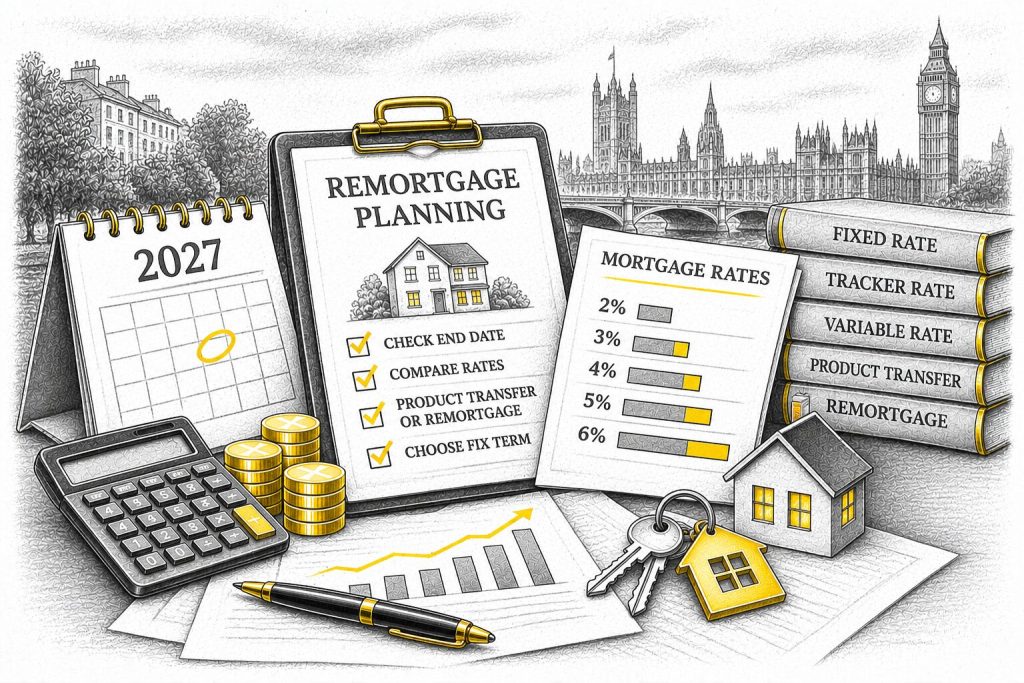
- 12 months before the end date: find out exactly when your deal ends and whether an early repayment charge applies if you leave earlier. Check what your lender’s standard variable rate would be.
- 6 months before: most lenders now let you secure a new rate, at no cost, and you can usually switch to a better one if it appears before you complete. Some offers last up to 12 months, depending on the lender.
- 3 months before: your application should be well advanced, so that your new deal starts the day your old one ends.
- 1 month before: confirm the start date with your lender and your adviser, and check what happens to your payments on the changeover day.
Product transfer or remortgage?
A product transfer means staying with your current lender and moving to one of its new deals. It is usually quicker, because your lender already holds your details, and it can be a good option. The trade-off is that you only see that one lender’s range. A remortgage means moving to a different lender, which opens up the whole market but involves a new application, valuation and legal work, although some remortgage deals include free valuations and legal work. Neither is automatically better. The right answer depends on the rates available, any fees, and your circumstances today.
What else to think about
- Rate against fees: a lower rate with a high arrangement fee is not always cheaper over the length of the deal.
- Length of fix: a shorter fix keeps you flexible but means doing this again sooner. A longer fix gives certainty but may cost more if rates fall.
- Your loan to value: if you have paid down your balance, you may qualify for a lower rate band.
- Changes since you last took advice: a new job, a change of income, or plans to move, let or release equity.
If you’re a landlord, it’s also worth factoring in the further rise in property income tax announced in the Autumn Budget, which takes effect from April 2027. See our full breakdown of what changed for property.
Nobody can say whether rates will be higher or lower in 2027. What you can control is how much time you give yourself to compare options. At London FS we look at the whole picture before recommending a product, and we can talk you through what is available well before your deal ends.
| About 2.3 million UK households reach the end of a fixed rate deal in 2027 (UK Finance, as reported by City AM, 3 November 2026). Average two-year fixed rate 5.97%, average five-year fixed 6.00%, average standard variable rate 7.13% (Moneyfacts, as at 2 November 2026). Mortgage offers are usually valid for six months, and some lenders honour them for up to 12 months. |
Frequently asked questions
Around 6 to 12 months before your fixed rate ends. Most lenders let you secure a new rate up to six months ahead.
You normally move onto your lender’s standard variable rate, which averages 7.13% (Moneyfacts, 2 November 2026) and is usually higher than the deals on offer.
Yes, with most lenders you can secure a rate up to six months before your current deal ends, at no cost, and switch if a better option appears.
Not always. A product transfer is quicker but limits you to one lender’s range. A remortgage opens up the whole market. The right choice depends on rates, fees and your circumstances.
This is general information and not personal advice. Your home may be repossessed if you do not keep up repayments on your mortgage. An early repayment charge may apply if you leave a fixed rate early. Outcomes depend on individual circumstances and lender criteria.
Sources: UK Finance figures on 2027 fixed rate expiries, as reported by City AM (3 November 2026) and The British Eye (2 November 2026); Moneyfacts average mortgage rates as at 2 November 2026, as reported by Forbes Advisor UK. London FS illustration: £200,000 balance, 25 years, repayment basis, rounded to the nearest pound.