
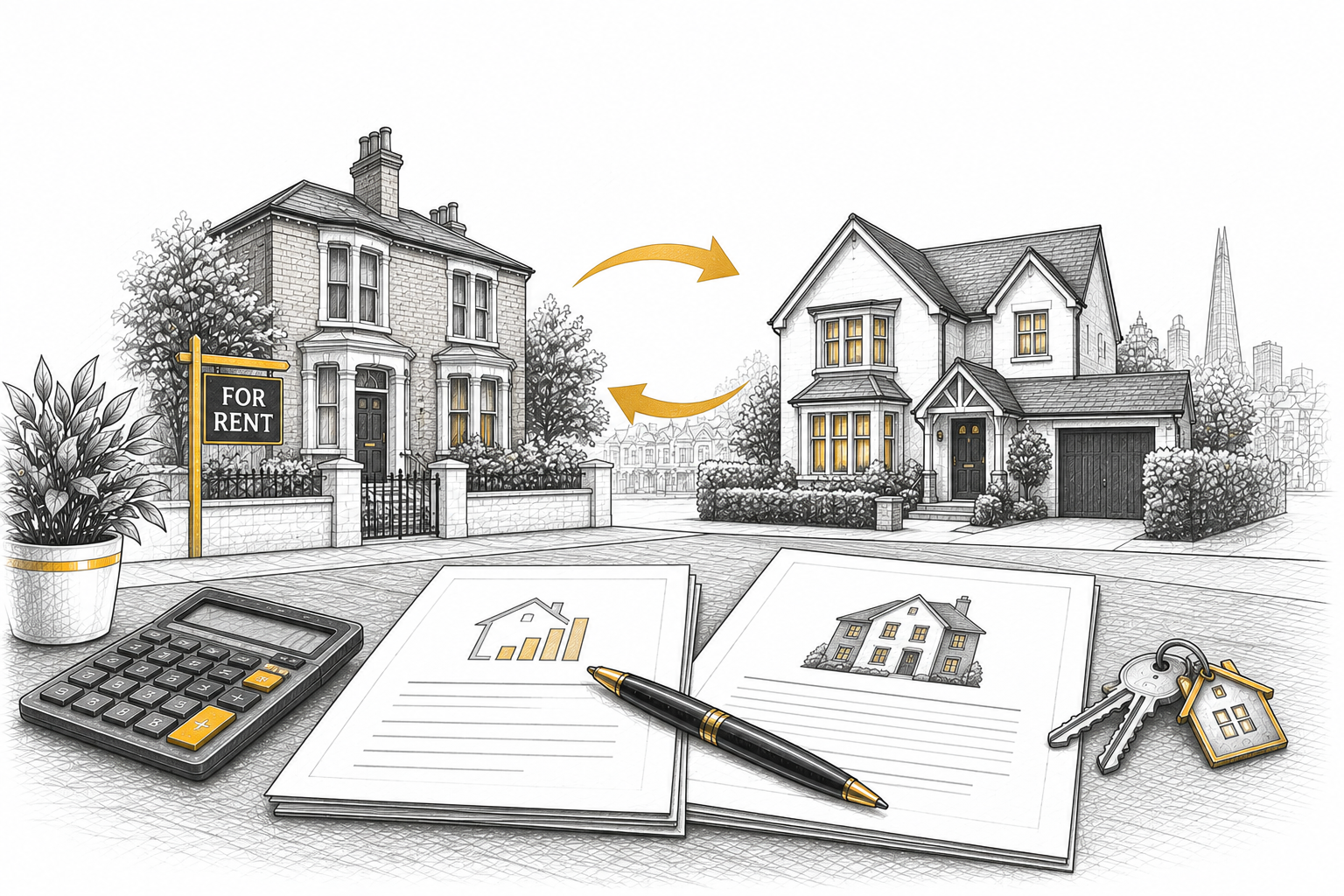
A client had found the next family home, but her flat sat in a chain that kept collapsing at the last hurdle. Rather than lose the purchase for a third time, she asked whether she could keep the flat, let it out, and buy the new place alongside it.
That is a let-to-buy mortgage, and it comes up more often than most people realise, either when a chain turns difficult or when the numbers on renting out the old place start to look attractive on their own terms.
How a let-to-buy is structured
Two mortgages, arranged together. Your existing home is remortgaged onto a buy-to-let basis, which frees up equity and switches the lending to be assessed against rental income rather than your salary. A separate residential mortgage is then arranged for the new property, underwritten against your own affordability.
Both have to be assessed with the other in view. The lender looking at the new residential loan wants to see that the buy-to-let side stacks up; the buy-to-let lender wants to know what the new residential commitment looks like. Neither will simply take the other on trust.
Consent to let comes first
Some residential lenders will not allow you to let the existing property at all. Others will, but charge a fee and restrict the letting to a fixed period. Establish this early, before you have built a plan around a route that may not be open to you.
The tax on the rent is not what it used to be
Rent from the let property becomes taxable income. Finance costs are no longer deductible in the way they once were: relief for individual landlords is now given as a basic rate tax credit, which in practice bites if you pay higher or additional rate tax. Run the net figure rather than the gross rent, because the difference between the two is where let-to-buy cases succeed or fail on paper.
Stamp duty, and getting it back
Buying the new home while you still own the old one usually means paying the 5% additional-property surcharge upfront. It can often be reclaimed if you sell the previous main residence within three years, which is the part most people know.
The part most people miss is that the refund is not automatic. You have to claim it, generally within 12 months of the sale or 12 months of the filing deadline for the original SDLT return, whichever falls later. On a London purchase that is frequently a five-figure sum sitting with HMRC waiting to be asked for.
Why the timing matters
The two mortgages need to move in step, not as two disconnected applications. Affordability on one side changes what is achievable on the other, and a delay on the buy-to-let remortgage will hold up the purchase it is meant to fund.
London FS structures both together, working with lenders who are comfortable assessing a let-to-buy as a single case rather than two unrelated files. If a chain is wobbling and you are weighing up whether to keep the old place, it is worth having that conversation before the purchase gets to the wire.
Sources: HMRC, tax relief for residential landlords; HM Government, Stamp Duty Land Tax higher rates and refunds guidance.