

The Strategic Transition: When Your Business Case for Ownership Outweighs the Lease
For established business owners the decision to remain a tenant or become an owner occupier is rarely about necessity but rather the most efficient use of capital. For years the flexibility of a lease served your growth by allowing you to scale without tying up liquidity in bricks and mortar. However, for companies with a strong trading history and a predictable three to five year outlook there is a compelling commercial argument for moving the premises from the expense column to the asset column.
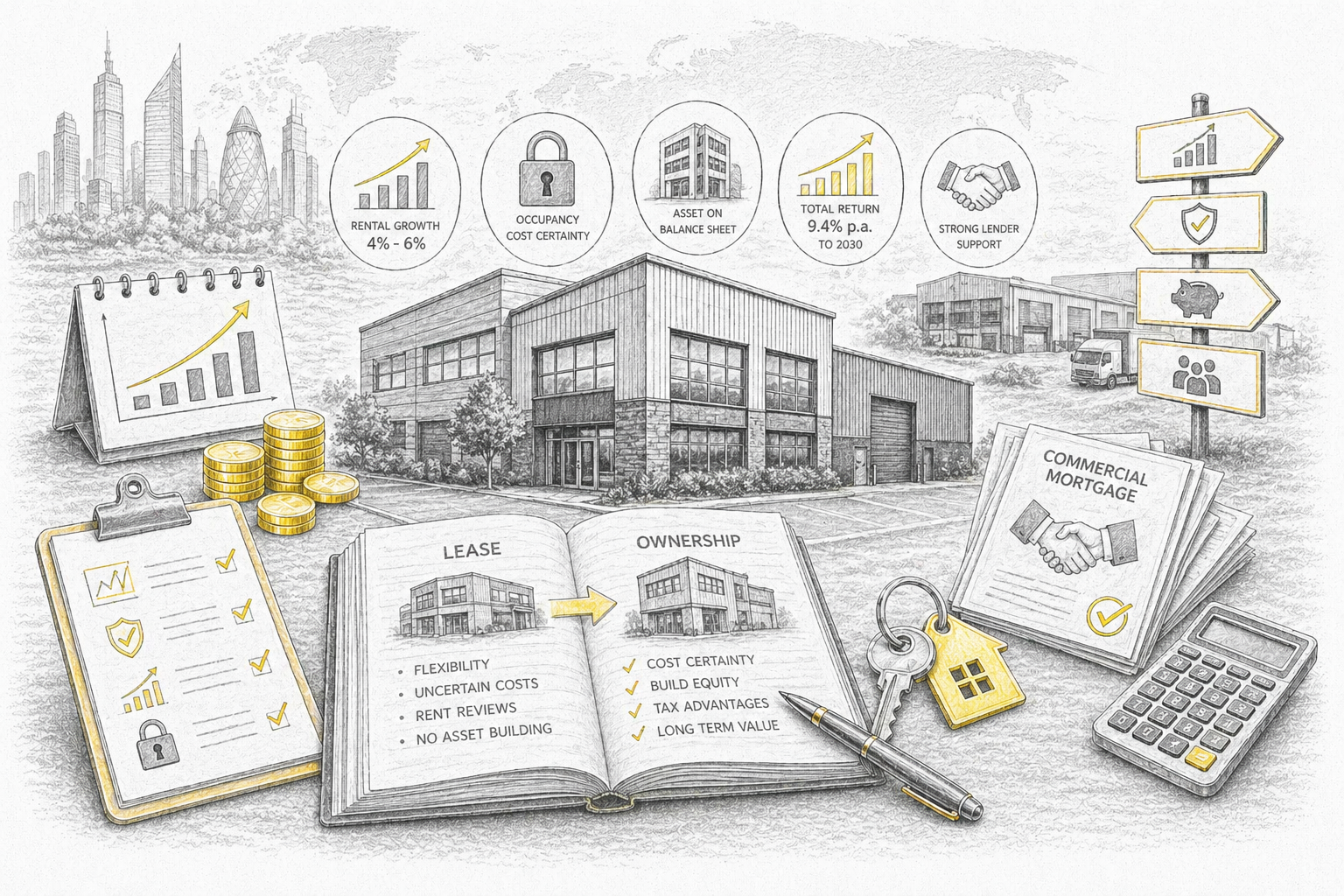
In the current 2026 market commercial tenants are facing a specific set of variables. According to Savills prime rental growth across the industrial and office sectors has remained consistent with many areas seeing 4% to 6% annual increases. While renting provides the ability to pivot or relocate quickly it also subjects the business to the uncertainty of upward only rent reviews and the eventual expiration of the lease term. For a tenant with strong books the alternative is about occupancy cost certainty. By securing a commercial mortgage you effectively hedge against future rental inflation. You are no longer reacting to the market and you are locking in your base of operations at today’s prices.
From a commercial perspective purchasing your own building is a significant move for the company’s enterprise value. When a business is valued for sale or investment a lease is a liability representing a commitment to future payments. Conversely owning the freehold adds a tangible and appreciating asset to the balance sheet. According to CBRE 2026 Outlook the total annual return for UK commercial property is forecast at 9.4% per annum through to 2030. For the owner occupier this return represents the underlying growth of the physical home of the business. This dual track growth where the business thrives while the property it inhabits builds equity is one of the most effective ways to compound wealth within a corporate structure.
It is a common misconception that commercial lending is always restrictive. In fact, for owner occupiers with a proven track record banks remain some of the most aggressive lenders in the market. In 2026 we are seeing high street institutions offering LTVs of 75% to 80% for established trading businesses in prime sectors. We recently secured up to 85% for one of our HNW clients. The bank’s logic is sound because they are lending to a successful entity that they know will occupy that building and service the debt. This covenant strength allows for some of the most competitive pricing in the specialist finance world. Our role at London FS is to ensure that your business’s financial health is presented in a way that maximises these terms and ensures the debt structure aligns with your company’s cash flow requirements.
Ownership also provides a layer of operational freedom that a lease cannot match. Whether it is a bespoke fit out or an extension to increase capacity or sub-letting surplus space to another business the owner occupier has total control. When the time comes to eventually exit the business the property becomes a powerful tool. You have the choice to sell the freehold alongside the business to potentially attract a higher premium or you can choose to retain the property and lease it back to the new owner. This creates a high quality and long term commercial investment for you personally while the business continues to operate from the same location under new leadership.
Ownership is not the right path for every business because flexibility still has its price. But for those with the balance sheet strength to consider it the transition from tenant to owner is a pivot toward long term stability and value creation. It is about moving from a position of reacting to the commercial property market to one where you own your place within it.
Sources:
Savills UK Commercial Market 2026
CBRE UK Real Estate Market Outlook 2026
Industry Standard LTV Benchmarks 2026