

Being self-employed shouldn’t make you a second-class borrower, but it often feels that way. Where an employee hands over three payslips and gets a decision, someone running their own business is asked to prove the same income several times over. It isn’t that lenders won’t lend to you — it’s that many of them read business accounts badly. Get the right lender, with your figures presented properly, and self-employed borrowing is far more straightforward than its reputation suggests.
This guide covers how self-employed mortgages actually work, what your options are, and the practical things that tip an application in your favour — whether you freelance, contract, or run a limited company.
How lenders look at self-employed income
Most lenders want to see two or more years of accounts to get a feel for how steady your income is. A few will consider one year with the right supporting evidence. Typically you’ll be asked for:
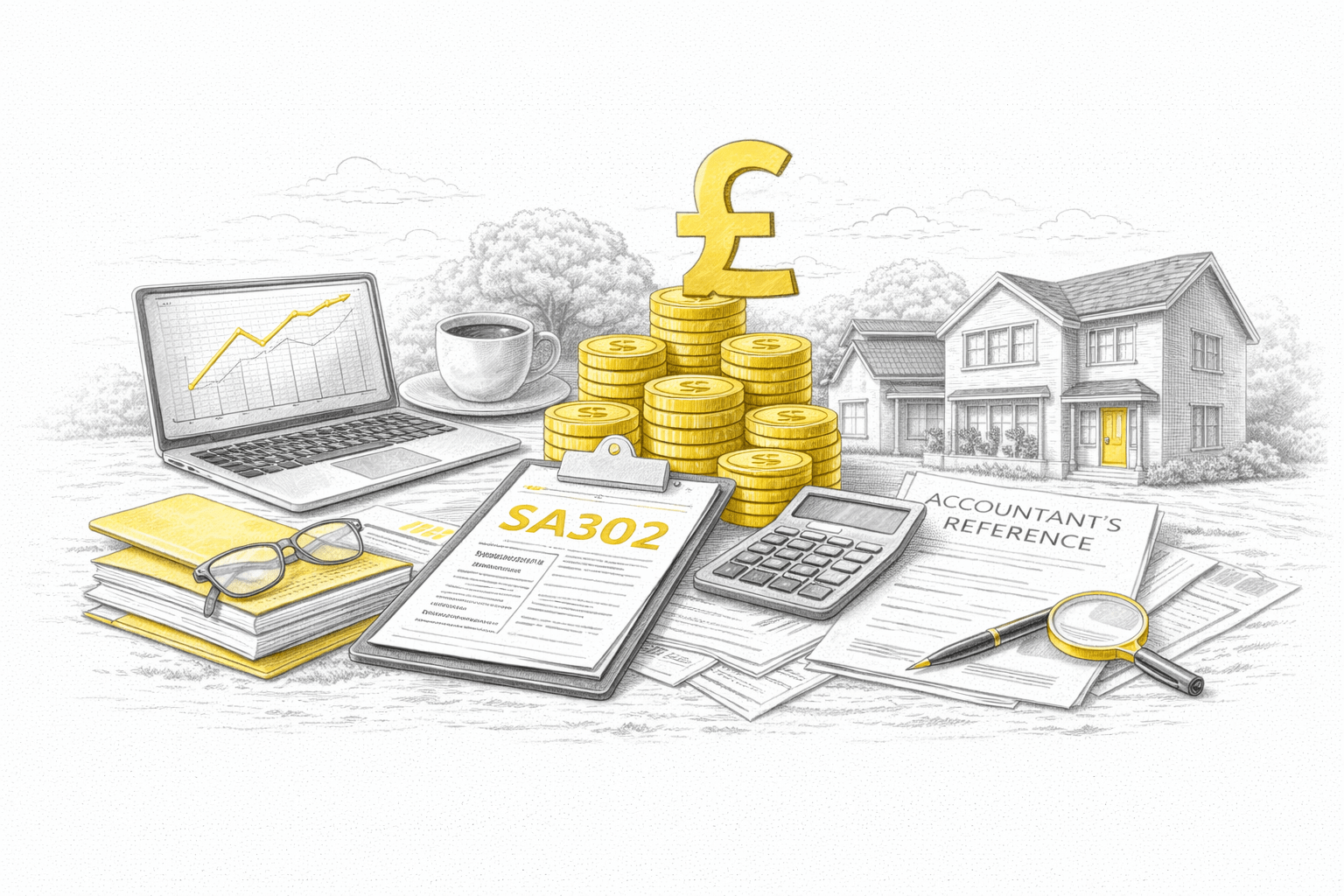
- HMRC tax calculations (SA302s) and tax year overviews
- An accountant’s reference or certified accounts
- Business and personal bank statements
- Profit and loss figures
One point worth knowing: if you run a limited company, some lenders assess your salary plus dividends, while others will use your share of retained profit. That single difference can dramatically change how much you can borrow — and it’s exactly the kind of thing a specialist broker checks before you ever apply.
The options open to you
- Standard residential mortgages. If your accounts are clean and consistent, you can often use the same high-street products as anyone else.
- Specialist lenders. For multiple income streams, a short trading history or a recent jump in profit, these lenders take a more human view.
- Higher loan-to-value deals. With a strong credit profile, 90–95% LTV is within reach.
- Interest-only. Useful where income is rising or a refinance is planned, provided there’s a credible repayment strategy.
Getting your application ready
Preparation does most of the heavy lifting here. Before you approach anyone:
- Get your accounts signed off. Two years, prepared by a qualified accountant, carries real weight.
- Tell a consistent story. Steady or growing profit reassures an underwriter far more than a single strong year.
- Tidy up your credit. Clear small debts and check your file before an application, not after.
- Keep other borrowing in check. A manageable debt-to-income ratio widens your choice of lender.
Why the lender you pick matters so much
No two lenders treat self-employed income the same way. One might decline you flat; another, looking at identical figures, offers a comfortable loan. That’s the single biggest reason to go through a broker who knows which doors to knock on. Through London FS, that usually means:
- More flexibility on how income is evidenced
- A better hearing for complex or recently changed accounts
- Terms shaped around how the business actually performs
The usual sticking points
- Income that moves around. A good year followed by a quieter one makes cautious lenders nervous.
- Accounts that need explaining. Several income streams take a clear narrative, not just numbers.
- Bigger deposits. Some lenders ask for more upfront to offset perceived risk.
- A smaller field. Fewer lenders genuinely specialise here, so knowing where to go counts.
None of these are unusual, and none are fatal. They’re simply reasons to prepare properly and take advice before you commit to a lender.
Where London FS comes in
London FS has spent years working with self-employed clients, and much of the value is in the translation — taking a set of business accounts and presenting them to a lender in a way that makes sense. We’ll point you to the right products, handle the paperwork through to completion, and push for the sharpest rate your circumstances allow.
The bottom line
A mortgage on self-employed income can feel daunting, but it’s very achievable with the right preparation and the right lender. Keep your records straight, understand how self-employed mortgages are assessed, and get a specialist in your corner — and you can approach lenders from a position of confidence rather than apology.
For advice tailored to your situation, call London FS on +44 (0)20 8427 5057 or email enquiries@london-fs.com.