
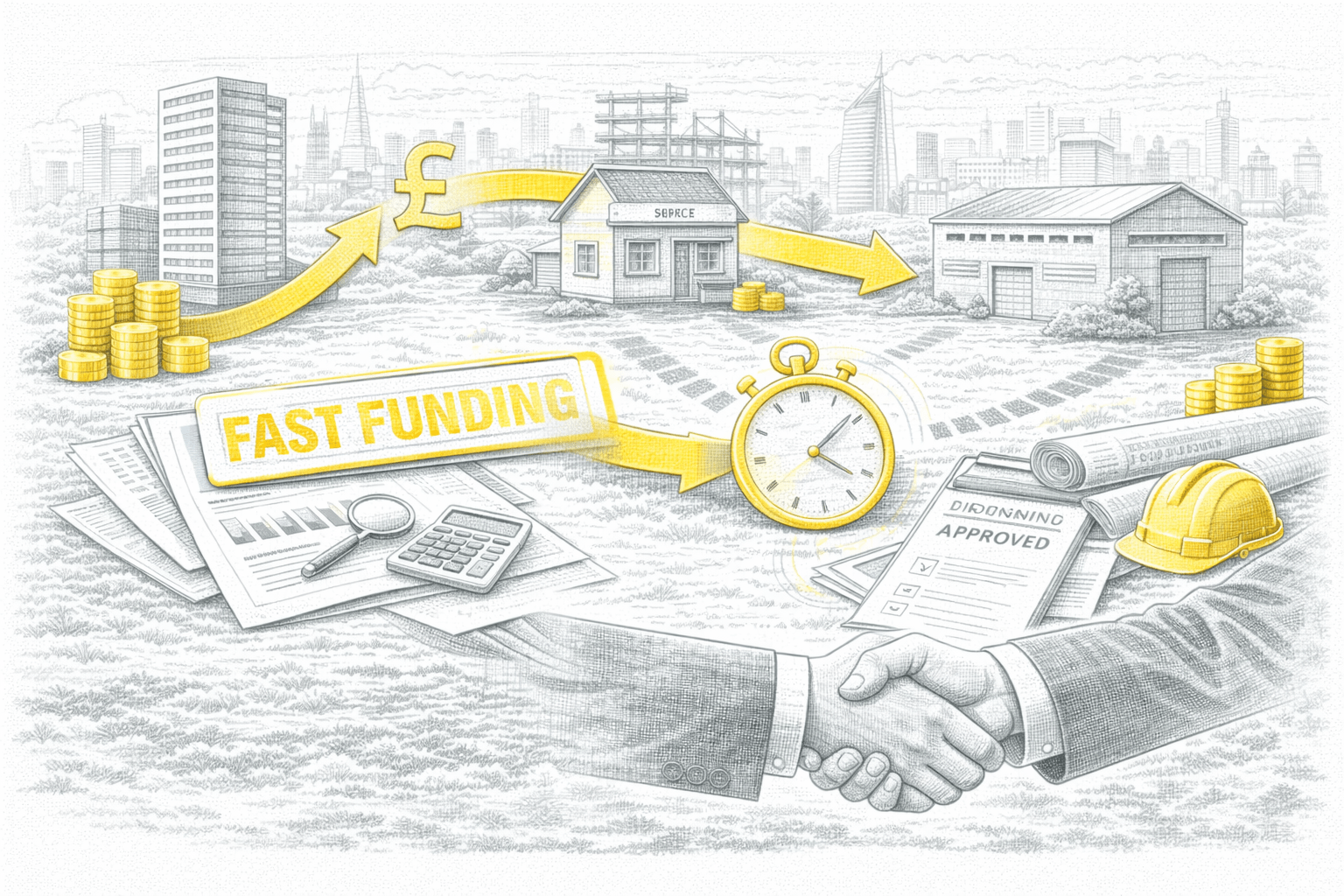
In London commercial property, the deal often goes to whoever can move first. Auctions demand completion in 28 days, distressed sellers want certainty, and a good building rarely sits on the market waiting for a bank to finish its checks. That is the gap bridging finance fills — short-term, property-backed funding that can be arranged in days rather than months, so an opportunity doesn’t slip away while a conventional loan grinds through underwriting.
At London FS we arrange this kind of funding regularly — for investors buying at auction, developers part-way through a refurbishment, and business owners who need to release cash tied up in a building. This guide walks through how it works, when it makes sense, and what to weigh up before you borrow.
What commercial bridging finance actually is
Commercial bridging finance is short-term funding secured against commercial property, used to buy or improve it until longer-term finance — or a sale — takes over. It is usually interest-only, with the loan repaid in full at the end of the term, which keeps monthly outgoings low while a project is underway. Typical uses are auction purchases, refurbishments, business expansion, and breaking a chain when timing is tight.
The real difference from a normal loan is the pace. A high-street lender runs an exhaustive review before it commits; a bridging lender concentrates on two things — the value of the property and how you plan to repay. That narrower focus is what makes a decision in days possible, and it’s why bridging holds its own against cash buyers.
Why speed matters so much in London
London’s commercial market moves fast, and delay has a real cost. A fortnight lost to slow underwriting can be the difference between securing a building and watching someone else complete on it. Bridging lets an investor act on the timeline the deal demands rather than the bank’s. The same logic applies to businesses — a company relocating or expanding can press ahead on interim funding while its longer-term facility is still being arranged.
Where it earns its keep
- Auctions. Fall of the hammer means completion in 28 days. Bridging comfortably meets that deadline where a mortgage won’t.
- Refurbishment and development. Fund light or heavy works now, add value, then refinance onto better terms once the property is worth more.
- Buying below market value. Distressed or off-market deals reward buyers who can move quickly and with certainty.
- Releasing tied-up capital. Draw equity from a property you already own to fund an expansion, an upgrade, or the next purchase.
- Bridging a refinance gap. When long-term funding is running late, it keeps a project on track instead of stalling.
How these loans are structured
- Term. Usually three to eighteen months — long enough to finish works or arrange a mortgage, short enough to stay cost-effective.
- Interest. Paid monthly or rolled up into the loan, which helps when a project isn’t yet producing income.
- Security. The property itself does the work; the lender looks primarily at its value.
- Early repayment. Many lenders let you repay early without penalty, so you stop paying interest the moment your exit completes.
Getting it right: purpose, cost and exit
Bridging is a tool, not a shortcut, and it rewards planning. Three things decide whether it works for you. First, a credible exit — a refinance, a sale, or business income that clears the loan on time. Second, a clear-eyed view of cost — rates reflect loan size, term and risk, so the sums have to stack up against the value the funding unlocks. Third, the right loan-to-value for the property type. This is where a broker earns their fee: matching your case to the lender most likely to say yes on sensible terms.
How London FS helps
London FS works across property finance and holds relationships with established bridging lenders. We take time to understand what you are trying to achieve, weigh the realistic options, and put your case forward clearly — so you can act decisively when a deal appears, with terms that fit the wider plan rather than working against it.
In short
In a market where speed decides who wins, commercial bridging finance gives investors and businesses a way to move on opportunities without waiting on slow approvals. Used well — with a sound exit and clear costs — it’s a genuinely powerful funding tool. The key is having someone who knows the lenders in your corner.
To talk through a specific deal, call +44 (0)20 8427 5057 or email enquiries@london-fs.com.
FAQs
How fast can commercial bridging funds be released in London?
Funding can be released within a few days, depending on property type and documentation. Many clients seek fast funding when timing is critical, especially for auctions or development opportunities.
Are bridging loans suitable for first-time property investors?
Yes. Many first-time buyers use bridging loans to secure initial projects. Guidance from specialists like London FS helps new investors understand terms, costs, and exit routes.
Can businesses use bridging loans for non-property purposes?
Businesses often use short-term commercial finance to stabilise cash flow or support expansion. As long as the loan is secured against eligible property, it can support various commercial needs.
What types of properties qualify for commercial bridging loans?
Eligible properties typically include offices, retail units, warehouses, mixed-use buildings, and development sites. specialist lenders assess each case individually to match the best available options.
Why do investors choose London FS for bridging finance support?
Clients value London FS for its expertise, access to established lenders, and tailored approach to commercial bridging finance. Their experience helps investors make informed decisions and secure competitive terms.